Kin*tsugi
Collaboration with Manuel Selg
Regeneration Through Microbial Collaboration
Kintsugi is a traditional Japanese practice of repairing broken ceramics by joining fragments together and transforming their scars into part of their story and beauty.
This work expands that philosophy through a play on the Japanese word kin, which means “gold” (金) while also evoking the identically pronounced character菌, associated with microorganisms.
What if damaged objects could be regenerated through collaboration with living organisms?
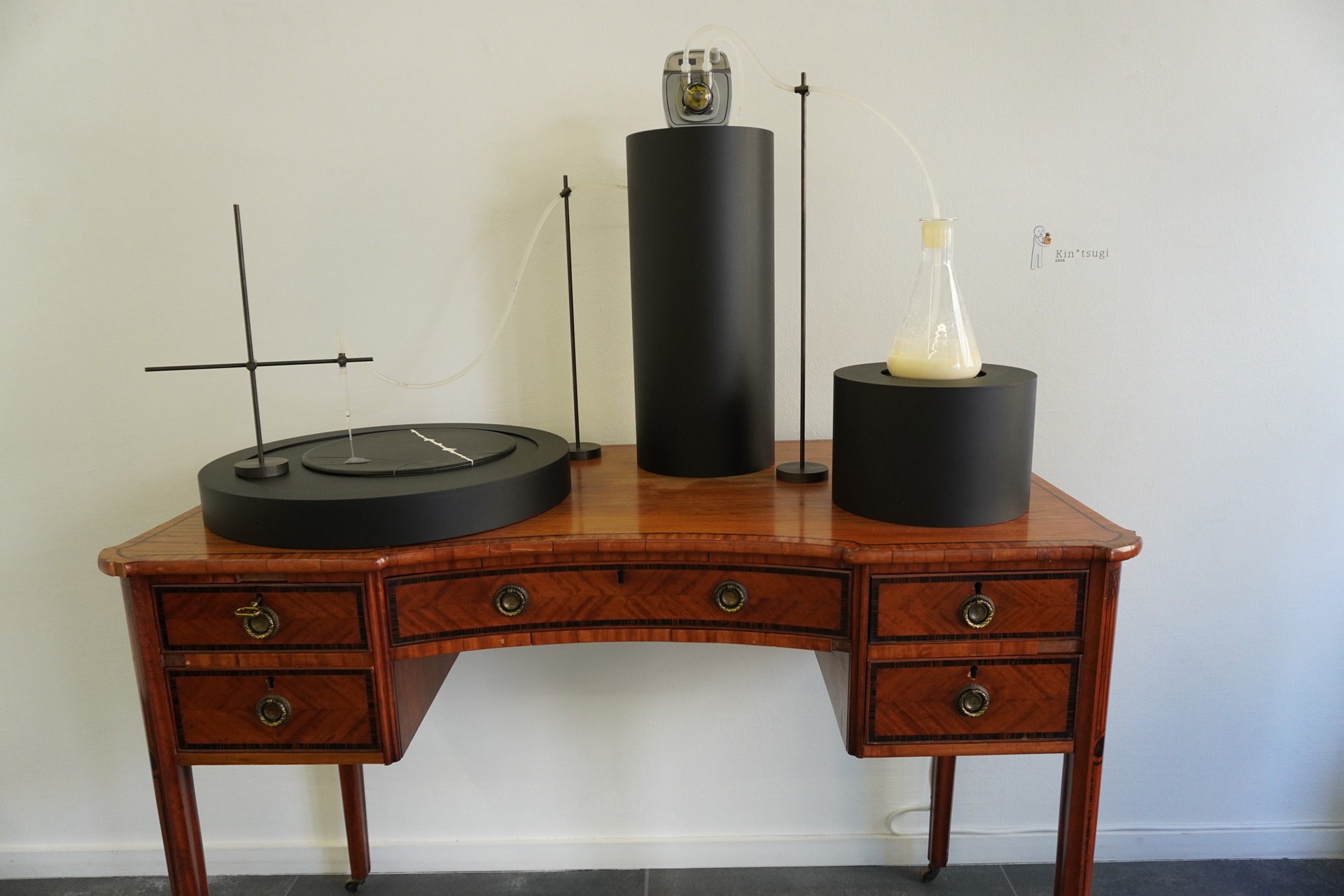
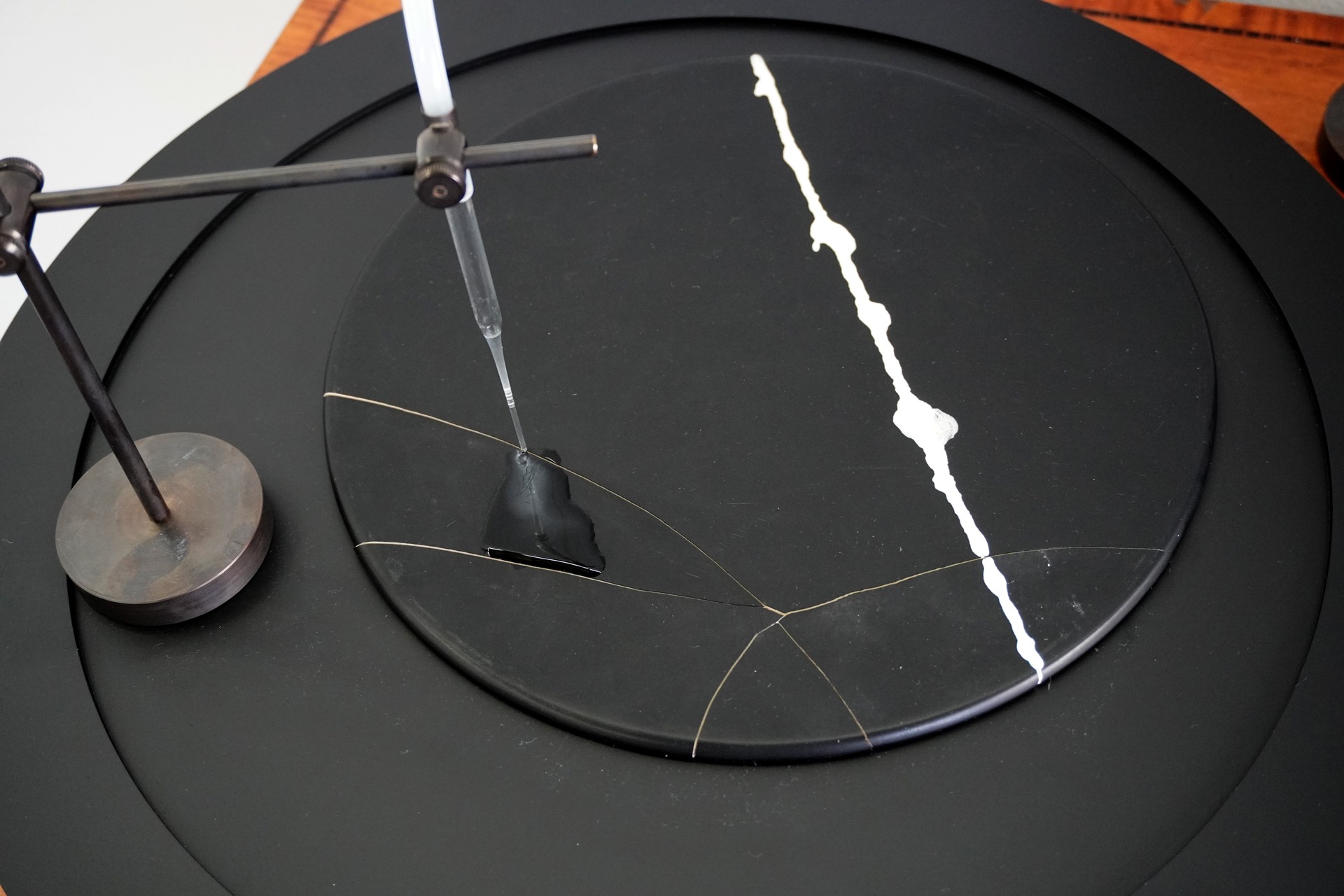
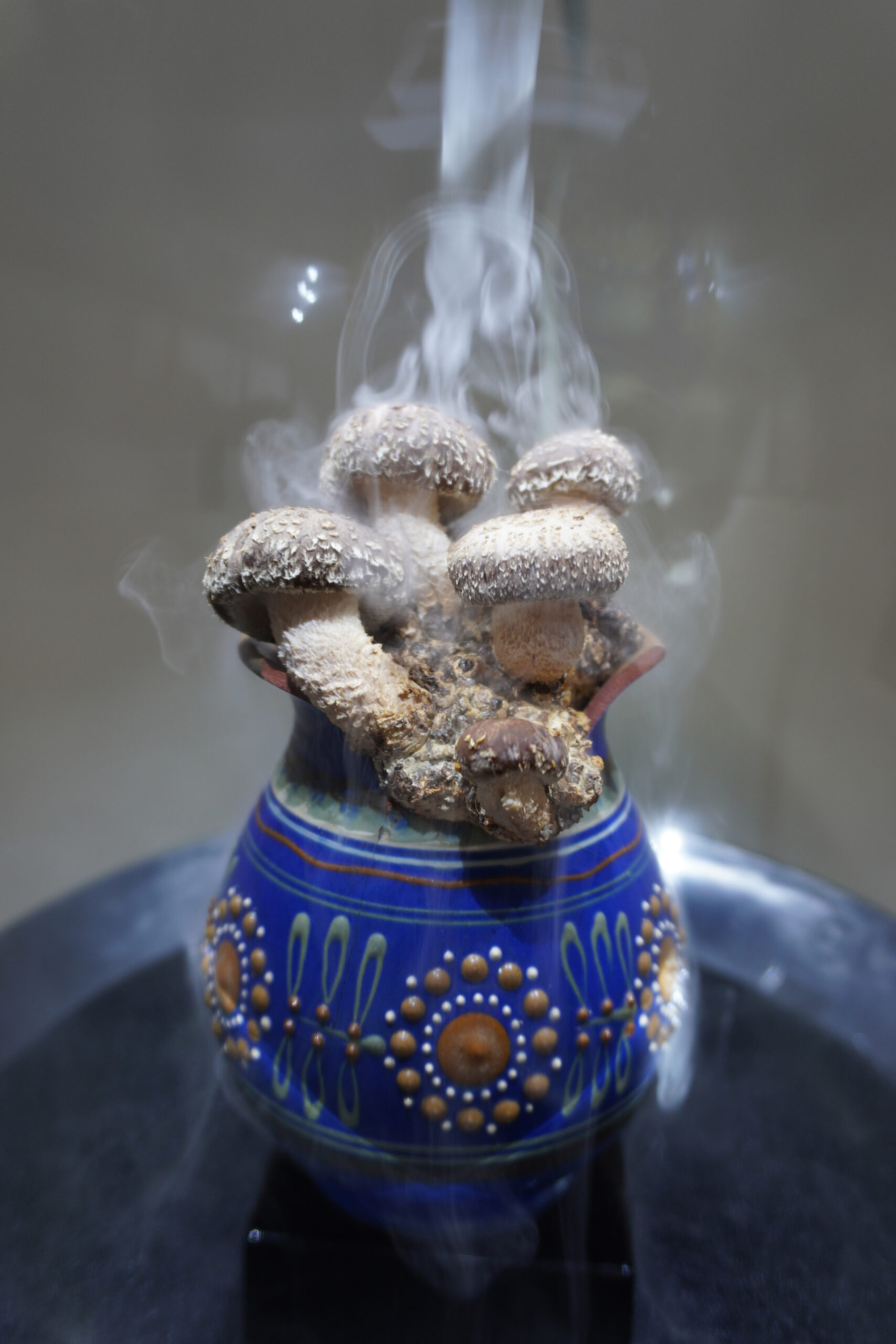
Kin*tsugi explores two biological processes: the colonization of broken materials by shiitake mycelium, and microbially induced calcification using Sporosarcina Pasteurii, a bacterium capable of producing calcium carbonate crystals.
Here, repair is no longer a purely human act. Living organisms respond, grow, and transform according to their own logic and temporality.
Regeneration is not about erasing damage. It is about cultivating new relationships.
Kin*tsugi proposes a future in which humans and microorganisms become co-creators in the act of repair.
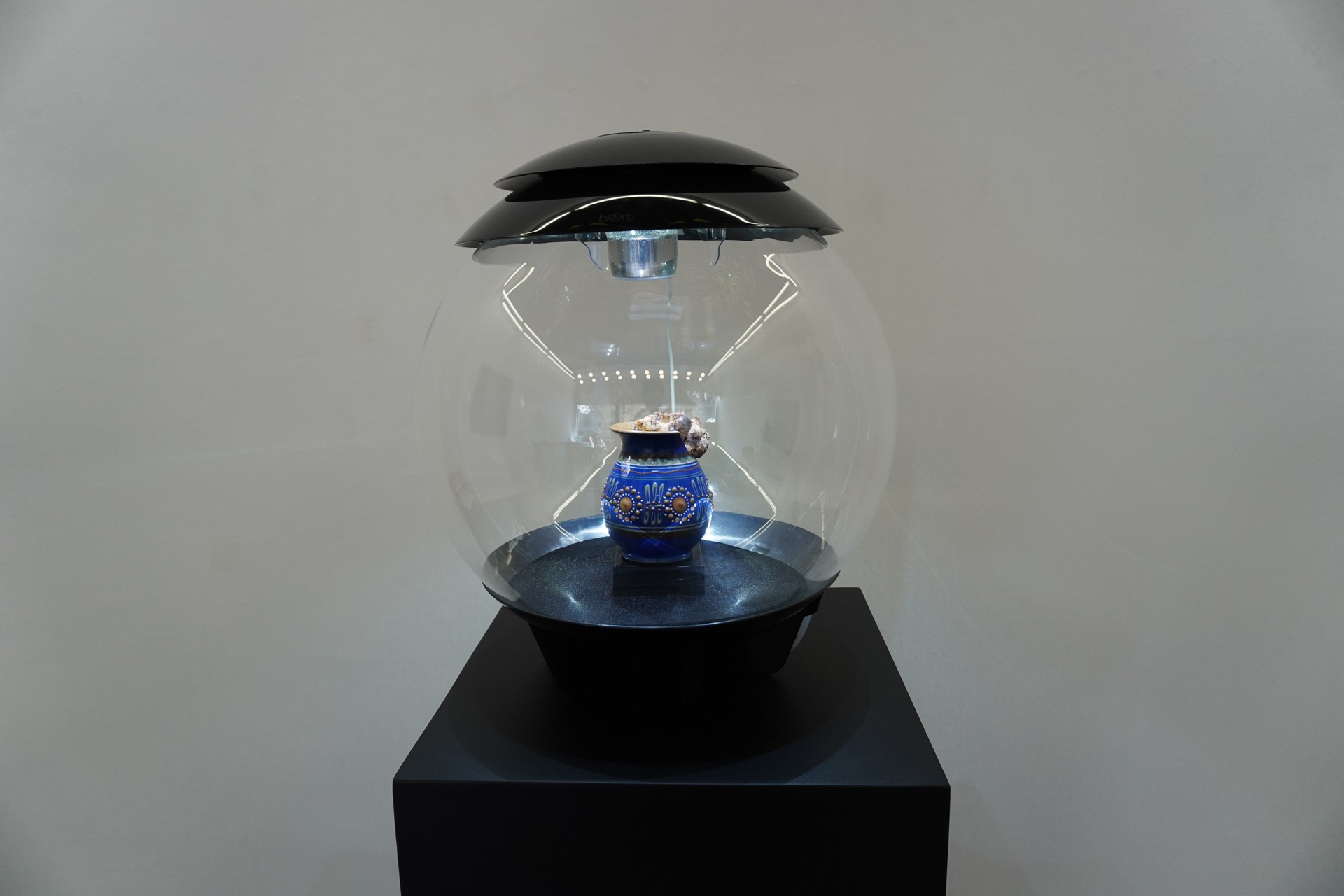
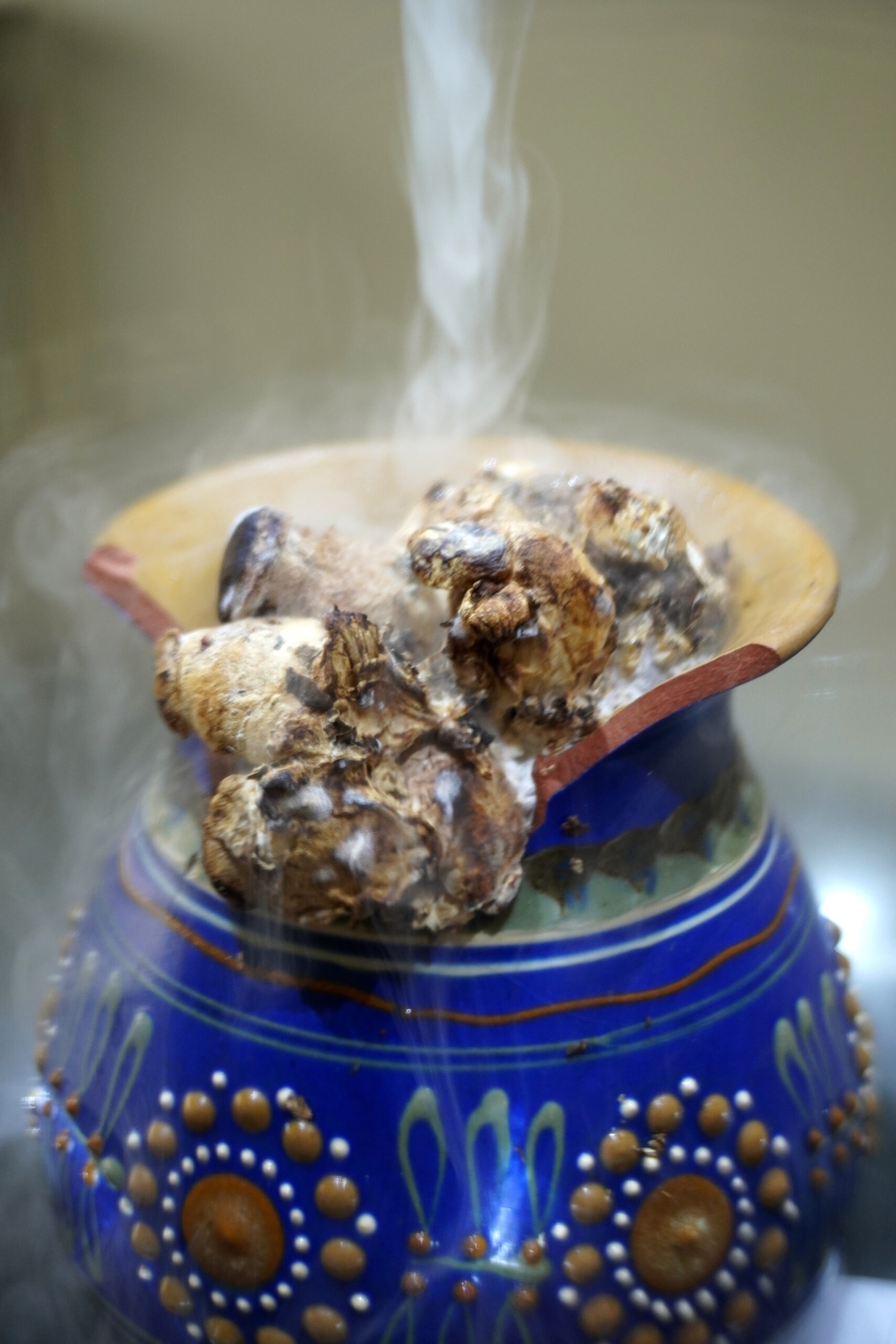
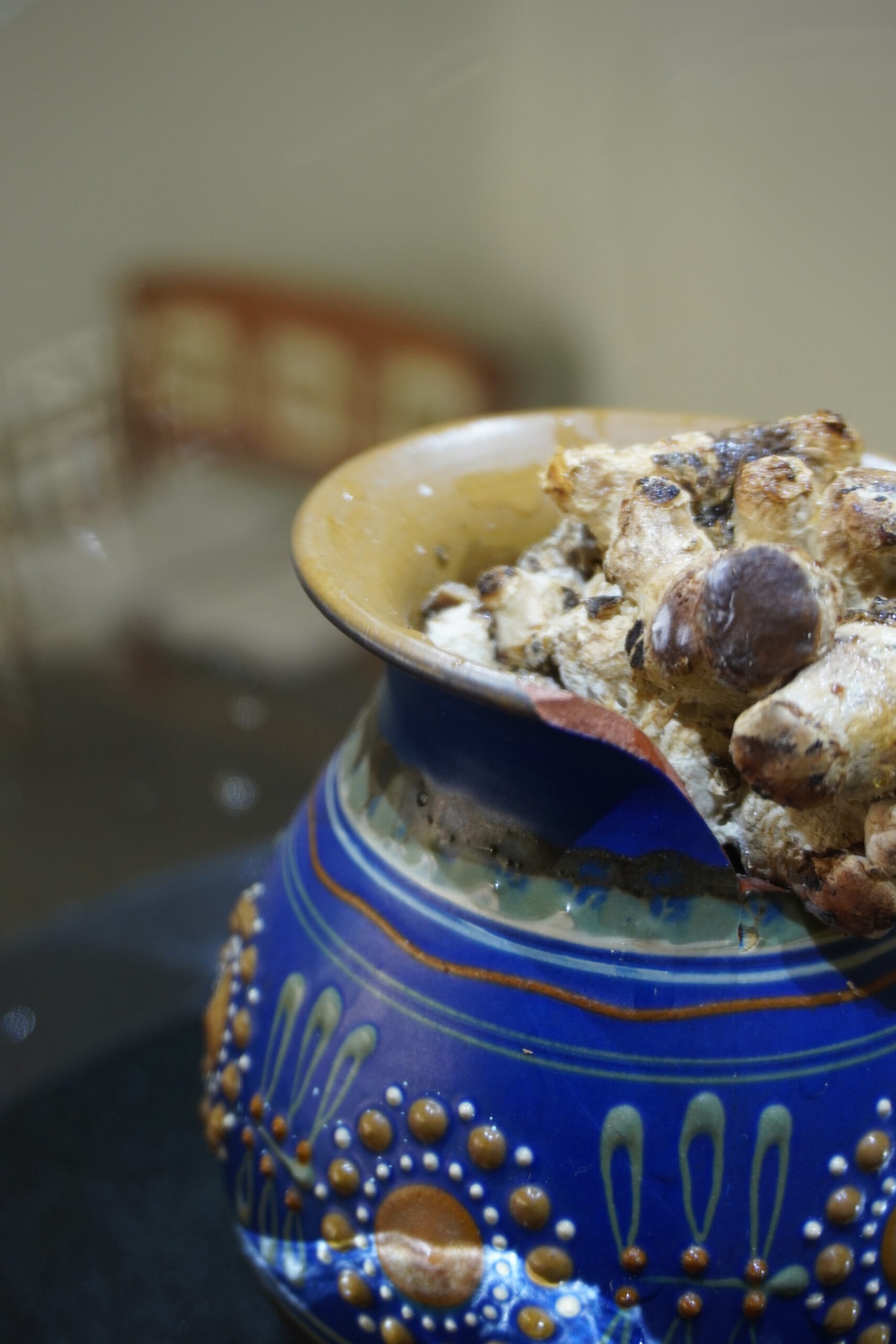
# Colonization
Inside this incubator are broken everyday objects—cups, bowls, and other household items. Fragments of shiitake substrate have been attached to their damaged surfaces. Maintained at a humidity of 75%, the mycelium slowly grows, covering and inhabiting the fractured areas. Under natural conditions, mycelium breaks down organic matter as part of ecological cycles. In this work, however, it turns toward objects created by humans. Rather than restoring what has been broken, it inhabits their surfaces, gradually transforming them into something else. Could we begin to see fungi not merely as decomposers, but as collaborators in the creation of future worlds?
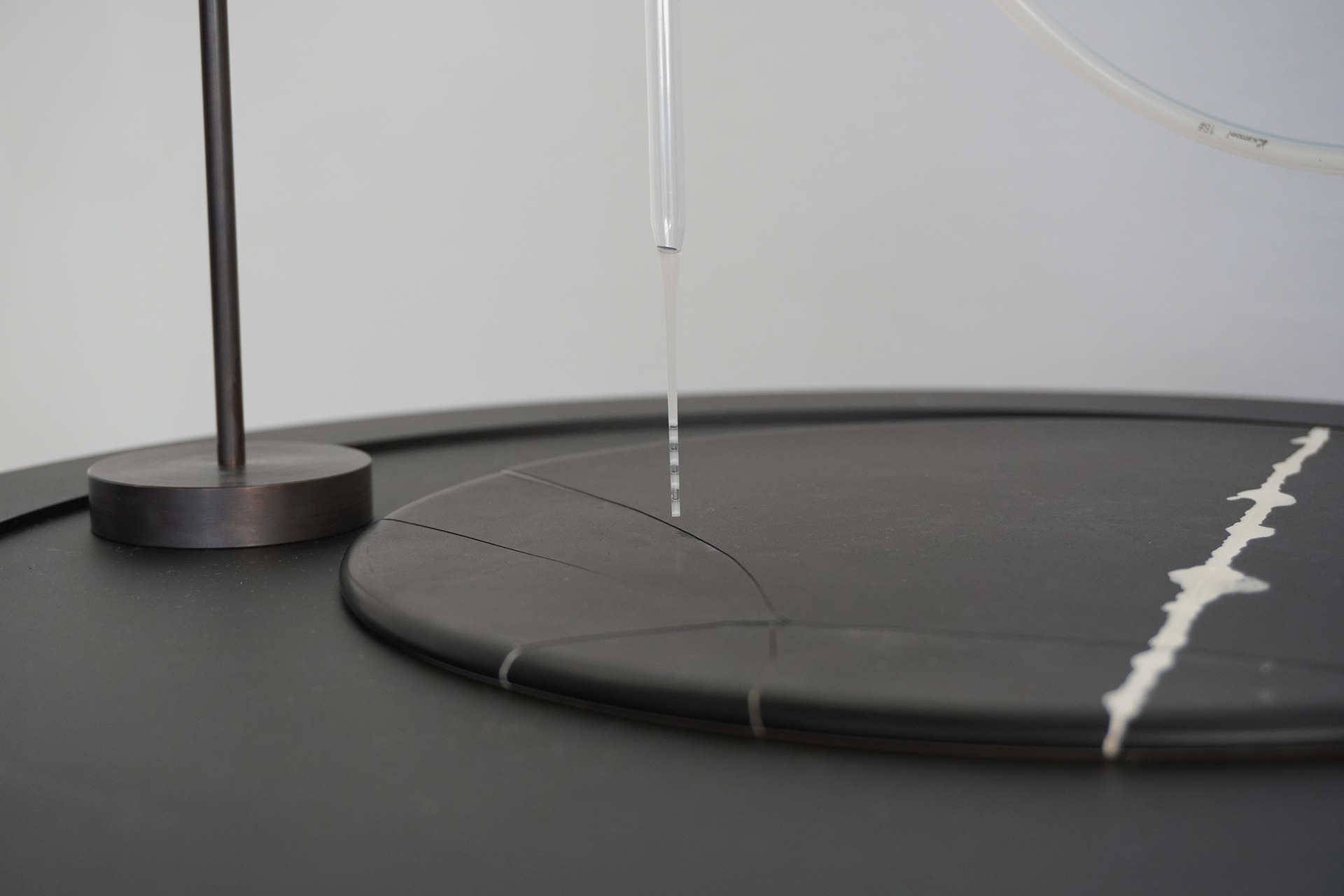
# Calcification
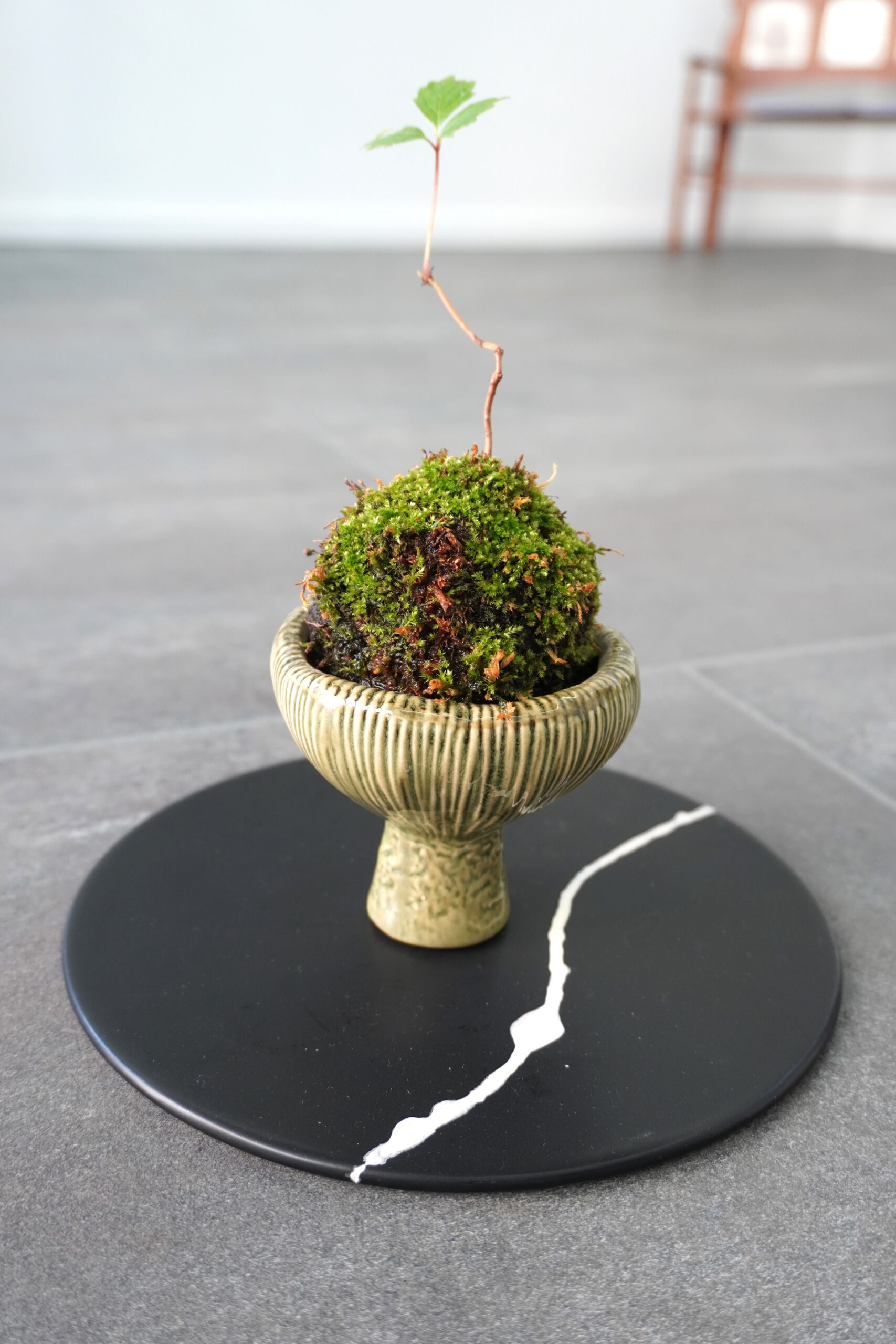
What if broken things could call upon invisible forms of life to heal their wounds? This work begins with fragments of shattered ceramics. Between them unfolds a quiet collaboration with microorganisms too small to be seen, yet capable of transforming their surroundings through the slow deposition of mineral traces. Over time, new crystalline structures emerge along the fractures, gradually reconnecting what was once separated. The microorganisms do not remember the original form. They do not seek perfection, nor do they erase the marks of rupture. Instead, they respond according to their own rhythms, depositing layer upon layer of crystal-like matter until a different kind of wholeness emerges. Repair is no longer an act imposed upon matter. It becomes a negotiation between human care and microbial agency, between intention and growth, between what is visible and what remains unseen. Could regeneration be understood not as the restoration of the past, but as the patient creation of new relationships between what was once separated?
Manuel Selg (born in Sigmaringendorf, Germany) studied biology and chemistry in the United States and is now professor of molecular biology at the University of Applied Sciences Upper Austria. Since 2009, he has been actively engaged in bioart. His projects are created exclusively through collaborative projects with artists from around the world and combine scientific approaches to visualize societal challenges with contemporary artistic practice. His works are not as much individual objects, but are more processes of a dialogue in which different perspectives converge and new ways of looking at current challenges emerge.
Year
2026
Team
- Lead: Emiko Ogawa, Hideaki Ogawa
- Concept: Hideaki Ogawa, Emiko Ogawa
- Artistic Direction: Hideaki Ogawa, Emiko Ogawa
- Installation Design: Hideaki Ogawa, Takeshi Kannno
Collaboration with:
- Manuel SelgExhibition
- REGENERATE WITH THE INVISIBLE, Linz / Austria, July 24 – September 26, 2026
Related Links
Flickr Photos